

Blog
Custom Shaped Wooden Products: 7 OEM Tooling Checks

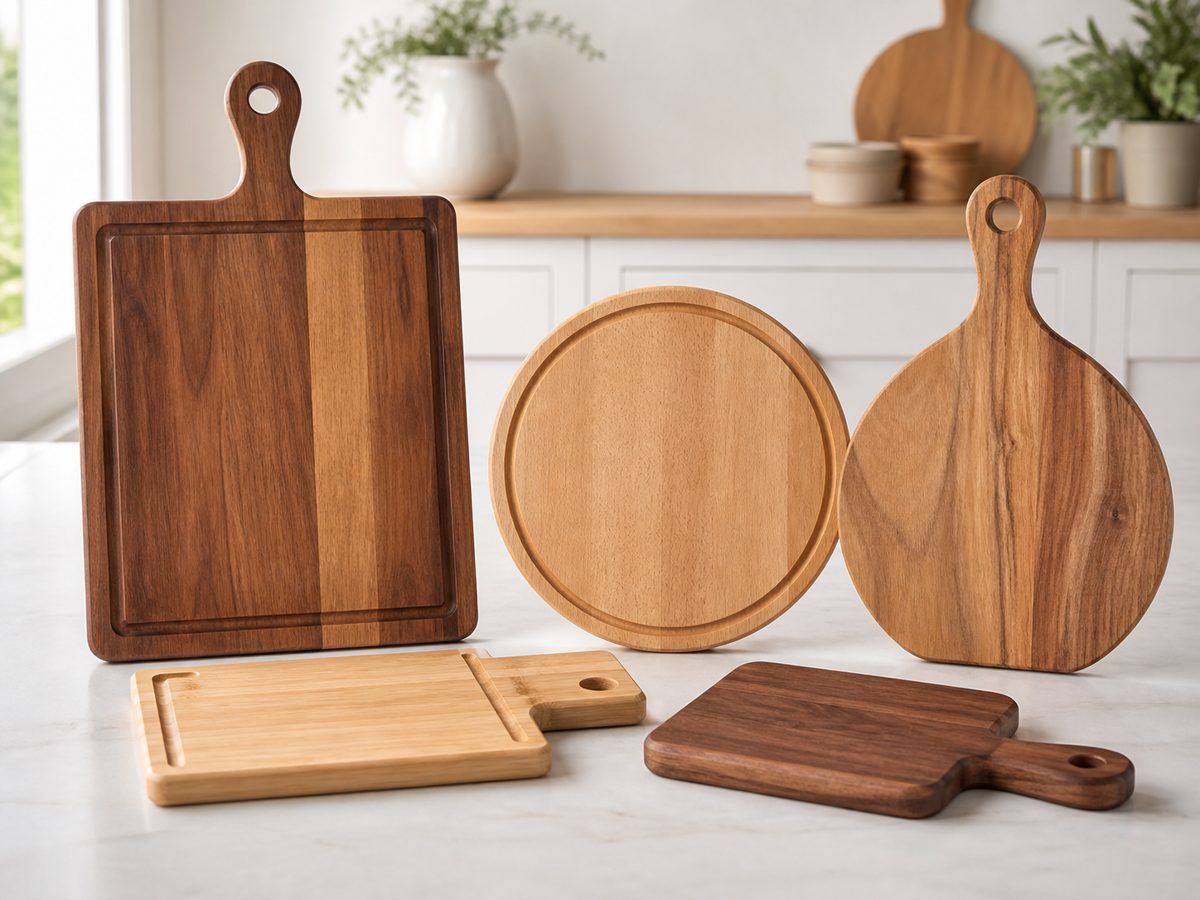
Custom shaped wooden products do not have to follow a standard round or rectangular outline. Zhiyunlai is a custom wooden products manufacturer supporting OEM, private label and wholesale projects, and can arrange custom cutting tools for suitable designs. The manufacturing route must still be reviewed against the drawing, wood material, intended use and order quantity before tooling is commissioned.
For buyers developing an irregular tray, decorative wooden piece, organizer component or branded gift, the important question is not simply whether the shape can be cut. It is whether the detail can be reproduced, sanded, inspected and packed consistently across a production order.
What Is Custom Tooling for Wooden Products?
Custom woodworking tooling is a cutting tool made for a specified profile or machining feature. It can help reproduce an edge, groove or contour that standard tooling does not match. It is different from a fixture, which holds the workpiece, and from a cutting program, which defines a machine path.
A bespoke cutter is not necessary for every irregular outline. Some designs can use existing tools; others may need dedicated tooling, a holding fixture or several machining operations. Zhiyunlai reviews the proposed shape before confirming the process. Tooling development does not mean that any geometry, material or tolerance is automatically feasible.
7 Checks Before Ordering Custom Shaped Wooden Products
1. Define the outline and critical dimensions
Provide a dimensioned drawing rather than a photograph alone. Show overall length, width and thickness, edge profiles, groove depths, holes and any mating parts. Identify which dimensions affect fit or function and which features are mainly decorative. If you start with a sketch or physical sample, agree on a production drawing before approving tooling.
2. Review material and grain direction
Wood species, grain direction and construction influence machining and the finished appearance. Narrow projections and thin sections deserve particular attention because they may be vulnerable during cutting, handling or shipment. Confirm the material sample and acceptable natural colour variation. Moisture requirements should be agreed for the product and destination conditions, not copied from a generic specification.
3. Check cutter access and finishing access
A shape that looks straightforward in a drawing may include corners, recesses or undercuts that are difficult to reach. Discuss internal radii, tool clearance and how the workpiece will be supported. Sanding must be considered alongside cutting: a decorative recess is not production-ready if rough fibres remain in an area that cannot be finished properly.
4. Separate tooling costs from product prices
Ask for any cutter development, fixture, sample and revision charges to be listed separately from the unit price. Confirm what each charge covers before proceeding. For custom shaped wooden products, order quantity and repeat-order plans help determine whether dedicated tooling is commercially sensible. Do not assume a new cutter always lowers the total cost.
5. Approve a physical sample and drawing revision
Compare the sample with the current drawing, intended use and finish reference. Check the profile, usable dimensions, edge smoothness, stability and fit with any accompanying item. Record requested changes before bulk approval. A change to thickness, radius or groove depth may require another tooling review, so keep the approved drawing revision and sample reference together.
6. Agree on inspection criteria
Set written acceptance criteria for critical dimensions, profile consistency, tear-out, splinters, cracks, sanding marks and finish variation. Where a shape must fit another part, define the fit check and reference item. Agree on the inspection method and sampling plan before production. Avoid an unsupported blanket tolerance for every feature: functional dimensions and natural visual variation need different checks.
7. Protect vulnerable details in packaging
Irregular outlines can leave handles, tips and raised features exposed. Review a packed sample as well as the product itself. Confirm separators, protective inserts, corner protection, units per carton and shipping marks. Retail presentation packaging and export transport protection serve different purposes. Specify the distribution route and agree on any relevant packaging test before shipment.
Information to Include in an OEM Enquiry
| Information | What the buyer should specify |
|---|---|
| Design | Drawing or sample, dimensions, profile details and revision number. |
| Material | Preferred wood, construction and acceptable grain or colour variation. |
| Use | Decorative, storage, serving or component use; any mating items. |
| Finish and branding | Finish reference, logo artwork, placement and care requirements. |
| Quantity | Quantity per design and size, plus expected repeat orders. |
| Quality and packing | Critical tolerances, inspection criteria, retail pack and export carton. |
| Destination | Market, shipping requirements and any applicable testing requests. |
This brief allows a wooden products factory to review manufacturability and quote against a clear specification. MOQ, sample timing, tooling charges and bulk lead time should be confirmed for the individual project; they are not fixed by the shape alone.
Applications for Private Label and Wholesale Buyers
Custom shaped wooden products may suit shaped serving boards, decorative trays, wooden organizers, gift components and small wooden home decor. These are design directions for review, not a promise that every reference image can be reproduced. The intended use matters: a decorative item is not automatically suitable for direct food contact, and a child-facing product needs its own safety assessment.
Tell Zhiyunlai about the destination market and use before sampling. Agree on any required material, coating or product testing without assuming that tooling approval establishes regulatory compliance. For the wider approval workflow, read our manufacturing and quality process guide. Our wooden serving trays wholesale guide covers related construction and packing checks.
Buyer FAQ
Can Zhiyunlai make cutting tools for an irregular wooden design?
Yes. Zhiyunlai can arrange custom cutting tools for suitable wooden product designs. Send the drawing or sample, material, intended use and quantity for review. The profile, machining access and sample results must be confirmed before bulk production.
Does every custom shape require a new cutter?
No. An irregular outline may be achievable with existing tooling and a suitable process. Dedicated tooling is considered when a specified profile or repeated feature calls for it. The drawing review determines the route; appearance alone does not establish the tooling requirement.
Who owns the tooling, and can it be used for repeat orders?
For repeat orders of custom shaped wooden products, agree in writing on tooling ownership, storage, maintenance, exclusivity if requested and repeat-order use before paying tooling charges. Paying a development fee does not by itself define those terms. Keep the approved drawing revision, sample reference, finish specification and packing details together. Before reordering with Zhiyunlai, identify any design changes and ask whether tool condition or a revised profile requires another sample approval. Confirm modification or replacement costs before proceeding.
What should be confirmed before mass production?
Before releasing custom shaped wooden products for bulk production with Zhiyunlai, approve the physical sample and identify the matching drawing revision, material, finish, logo artwork and packed-sample reference. Record critical dimensions, inspection methods and acceptance criteria in writing. List any open changes and confirm that they are resolved before production release; silence or a reference photograph is not a substitute for approval. Also confirm commercial terms and the event from which the quoted lead time is measured.
Discuss Your Custom Wooden Product with Zhiyunlai
Planning custom shaped wooden products for an OEM or wholesale range? Email fabio@zhiyunlai.com with your drawing, sketch or reference photo, approximate dimensions, quantity per design, preferred wood and destination market. Include the intended use, finish, logo and packaging direction when known. If the design is not final, mark the dimensions and features that still need review. Zhiyunlai can assess custom cutting-tool requirements before sampling and quotation; feasibility, tooling costs and the production specification must be confirmed for the individual project.
Technical background: Profile Technology describes application-specific woodworking cutting tools. This is an independent tooling reference, not an endorsement or a claim about Zhiyunlai equipment.
 Furniture