

Blog
Custom Wooden Serving Board Private Label: 2026 OEM Wholesale Guide

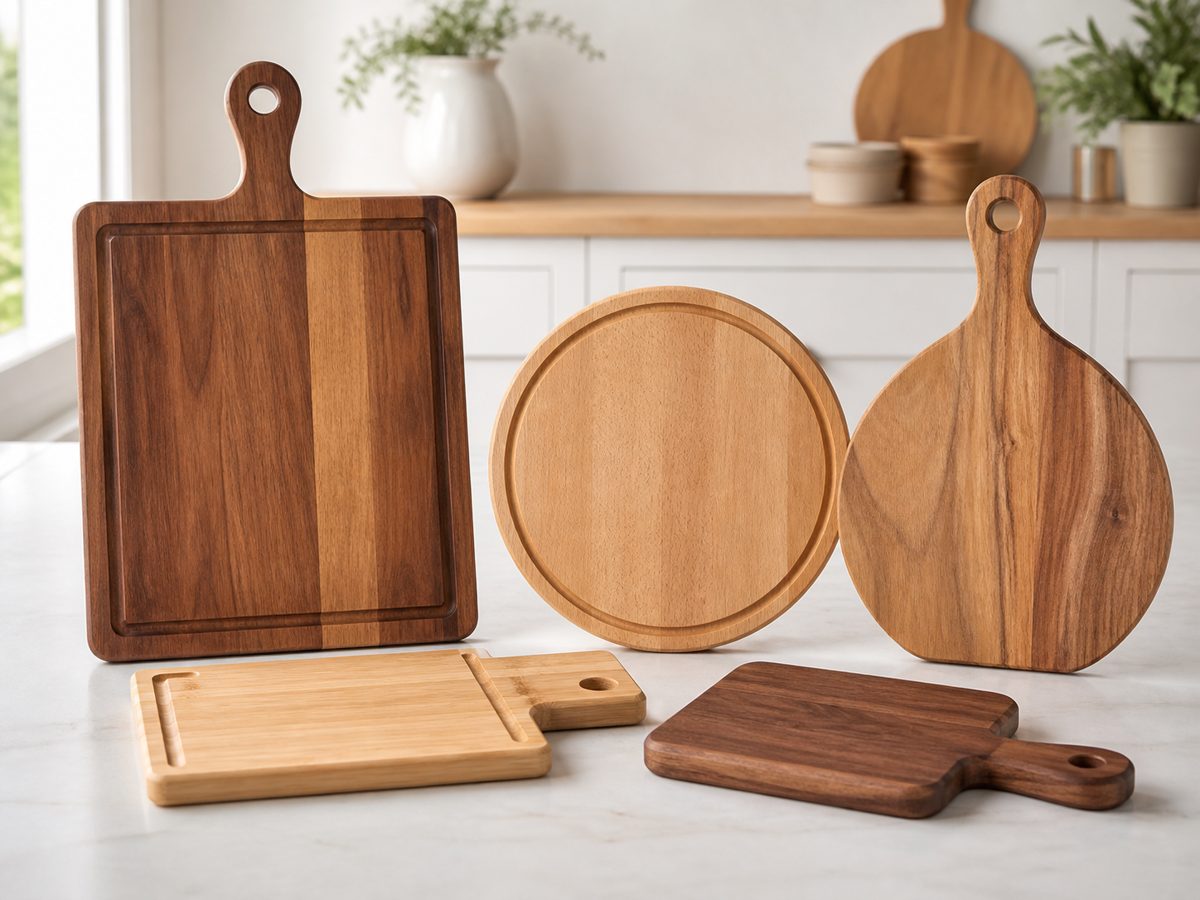
Wooden serving boards, charcuterie boards and cheese boards remain strong products for private label kitchenware, gift, hospitality and home decor programs. They are visually attractive, easy to bundle, and suitable for both retail shelves and e-commerce. For overseas buyers, the key is not just the board shape. A reliable OEM order depends on wood selection, moisture control, sanding, food-contact finish, logo method, packaging protection and final inspection.
This guide is written for importers, kitchenware brands, Amazon sellers, retailers, restaurant suppliers and wholesale buyers looking for a custom wooden serving board manufacturer. It explains the sourcing details that should be confirmed before sampling and bulk production.
Why Wooden Serving Boards Fit Private Label Demand
Current search and marketplace signals around wooden serving board, charcuterie board, cheese board, acacia board, custom logo board and wholesale kitchenware show clear B2B intent. Buyers use these products for cheese sets, wine accessories, holiday gifts, hospitality service, restaurant presentation and branded retail collections.
Zhiyunlai supports custom wooden products, OEM manufacturing and wholesale programs for buyers who need factory-direct wooden kitchenware. For serving board projects, the most important decisions are wood species, board thickness, edge profile, handle structure, finish requirement, logo placement and export packaging method.
Popular Serving Board Formats for OEM Buyers
| Board format | Typical buyer use | Customization focus |
|---|---|---|
| Rectangular serving board with handle | Kitchenware, restaurant service and branded gift sets | Handle hole, board thickness, juice groove, logo position and hang tag |
| Round cheese board | Wine accessory, party serving, retail gift and hospitality use | Diameter, edge radius, groove design, finish and gift box |
| Paddle-shaped charcuterie board | Premium home decor, grazing board and e-commerce bundles | Shape accuracy, hanging hole, surface grade and laser logo |
| Small tasting board set | Hotel, cafe, dessert, appetizer and promotional gift programs | Set quantity, nesting size, carton divider and barcode label |
| Serving board with juice groove | Kitchen prep, BBQ, meat serving and butcher-style retail lines | Groove depth, corner radius, sanding standard and oil finish |
Material Options and Finish Requirements
Acacia, bamboo, beech, rubber wood, oak and walnut-tone stained wood are common choices. Acacia has strong natural grain and works well for premium gift boards. Bamboo is lightweight and stable for value-oriented kitchenware. Beech and rubber wood can be cost-effective for large wholesale programs. Buyers should confirm whether the board is solid wood, laminated board or bamboo panel because each structure affects price, appearance and dimensional stability.
Serving boards are often used near food, so the finish needs to be discussed carefully. Buyers should define whether they need food-grade oil, natural oil finish, lacquer-free surface, stain color, or another buyer-approved coating. Certification and compliance claims should only be used when actual testing documents are available for the material and finish.
OEM Production, QC and Packaging Workflow
| Stage | Factory control point | Buyer checkpoint |
|---|---|---|
| Design confirmation | Board size, shape, handle, groove, logo and package structure | Approve drawing, sample target and packaging brief |
| Wood preparation | Moisture content, color sorting, grain direction and board thickness | Confirm approved sample as color and grain reference |
| Cutting and shaping | Size tolerance, handle hole, edge radius and groove accuracy | Check board shape, balance and machining consistency |
| Sanding and surface finishing | Hand feel, oil absorption, odor, stain consistency and surface defects | Confirm finish standard before mass production |
| Logo and labeling | Laser engraving depth, brand placement, hang tag and barcode accuracy | Approve logo sample and retail label proof |
| Final inspection | Cracks, warping, rough edges, stains, packaging protection and carton strength | Use AQL or buyer-defined inspection criteria before shipment |
Private Label Customization Options
- Laser engraved logo, heat stamp or blank logo area for buyer branding
- Custom board shape, handle style, hanging hole and juice groove
- Natural, oiled, acacia, walnut-tone or buyer-approved finish
- Single board, 2-piece set, cheese board set or gift bundle
- Kraft box, color box, sleeve, hang tag, barcode label and export carton marks
Packaging Details B2B Buyers Should Confirm
Serving boards can be scratched or dented if packaging is too thin. A buyer should confirm inner protection, paper wrap, corner protection, carton strength, moisture control during shipping and whether the retail box can handle e-commerce delivery. For gift sets, the box should hold the board firmly so the surface does not rub against accessories during transit.
For wholesale and hospitality orders, plain brown box packaging may be enough. For private label retail, buyers usually need printed sleeves, hang tags, barcode labels, instruction cards, care cards and carton shipping marks. These details should be included in the quotation because packaging can affect both cost and lead time.
How to Brief a Serving Board Manufacturer
A complete RFQ should include board dimensions, target thickness, wood species or target price range, finish requirement, logo method, packaging type, order quantity, destination country, care card requirement and inspection standard. If the product will be sold on Amazon or in retail stores, include barcode, carton drop protection and photo-quality requirements in the brief.
Buyers building a larger wooden kitchenware line can also review our guides for custom wooden spice racks, custom wooden cutting boards and custom wooden coasters. Keeping wood tone, packaging style and QC requirements consistent helps the final private label collection look more professional.
FAQ
What wood is best for private label serving boards?
Acacia is often chosen for premium grain and gift positioning. Bamboo is suitable for lightweight kitchenware programs. Beech, rubber wood and oak-tone options can work for large wholesale orders depending on the target price and finish.
Can serving boards be customized with a logo?
Yes. Common methods include laser engraving, heat stamping and branded packaging. Buyers should approve the logo position, engraving depth and sample appearance before mass production.
What QC points matter most before shipment?
Important QC points include moisture content, warping, cracks, surface smoothness, edge radius, finish odor, logo accuracy, packaging protection and carton strength. These points should be written into the inspection requirement before production starts.
What packaging is suitable for private label serving boards?
For wholesale orders, paper wrap and brown box packaging may be enough. For private label retail, buyers often use kraft boxes, color boxes, sleeves, hang tags, care cards, barcode labels and stronger e-commerce carton protection.
 Furniture